Radtour Flüsse-Tour in Deutschland im Mai 2014
Geplante Tour: Moselle - Rhine - Lake Constance - Danube
Aktionen

Bitte warten - Kartendaten werden geladen
Erstellt am 07.12.2013,
zuletzt geändert von biroto-Redaktion am 22.12.2013
Aktionen
Strecken-Merkmale
geplant
gefahren
Gesamtlänge in km
1.588
0
Gesamthöhenmeter Aufstieg
12.009
0
Durchschn. Steigung Aufstieg %
0,76
-
Gesamthöhenmeter Abstieg
11.845
0
Informationen zu Rechten an den GPS-Track-Daten | |
|---|---|
Rechte-Inhaber | biroto-Redaktion & biroto-Contributors |
Rechte-Ausprägung / Lizenz | by-sa: CREATIVE COMMONS Namensnennung, Weitergabe unter gleichen Bedingungen |
Link zur Rechtebeschreibung | |
gpx-Datei übernommen aus | |
gpx-Datei hochgeladen | durch biroto-Redaktion am 07.12.2013
|
Gesamtzahl Trackpoints
19.628
0
Trackpoint-Dichte per km
12
0
Endorte
Start
Trier, Rheinland-Pfalz, DE (134 m NHN)
Ziel
Passau, Bayern, DE (298 m NHN)
Fahrradfreundliche Unterkünfte, Sehenswertes und Infrastruktur
Name u. Anschrift
Breite / Länge
Tel.
Fax.
Mobile
Art d. Unterkunft
Radler-freund-lichkeit
Strecken-km
km zur Strecke
Höhe
0 km
1,4 km
123 m
0 km
1,0 km
131 m
0 km
1,7 km
145 m
0 km
3,1 km
150 m
0 km
1,1 km
140 m
Informationen zu Urheber-Rechten | |
|---|---|
Rechte-Inhaber | |
Rechte-Ausprägung / Lizenz | by-sa: CREATIVE COMMONS Namensnennung, Weitergabe unter gleichen Bedingungen |
Link zur Rechtebeschreibung | |
Bild übernommen aus | |
Bild hochgeladen | durch biroto-Redaktion am 22.02.2012
|
Informationen zu Urheber-Rechten | |
|---|---|
Rechte-Inhaber | |
Rechte-Ausprägung / Lizenz | by-sa: CREATIVE COMMONS Namensnennung, Weitergabe unter gleichen Bedingungen |
Link zur Rechtebeschreibung | |
Bild übernommen aus | commons.wikimedia.org/wiki/File:Trier_Hauptmarkt_Fachwerkhäuser_BW_1.JPG |
Bild hochgeladen | durch biroto-Redaktion am 22.02.2012
|
Informationen zu Urheber-Rechten | |
|---|---|
Rechte-Inhaber | |
Rechte-Ausprägung / Lizenz | by-sa: CREATIVE COMMONS Namensnennung, Weitergabe unter gleichen Bedingungen |
Link zur Rechtebeschreibung | |
Bild übernommen aus | |
Bild hochgeladen | durch biroto-Redaktion am 22.02.2012
|
Trier ist eine über 2000 Jahre alte Großstadt an der Mittelmosel in Rheinland-Pfalz. Trier, einst als Augusta Treverorum von den Römer gegründet, ist eine der ältesten Städte Deutschlands. Triers große historische Bedeutung wird durch die zahlreichen antiken und mittelalterlichen Baudenkmäler unterstrichen, von denen acht von der UNESCO als Welterbe ausgezeichnet wurden.
Hintergrund
Gegründet wurde Trier von Kaiser Augustus spätestens im Jahr 16 v. Chr, was durch den Bau der ersten römischen Moselbrücke dokumentiert ist. Als Siedlungsgebiet der Treverer liegen die Ursprünge der Stadt jedoch bereits in vorrömischer Zeit. Die Bedeutung der Stadt im römischen Reich wuchs schnell; es wurde eine Stadtbefestigung errichtet, ein Amphitheater und Thermen gebaut. Im 3. Jahrhundert stieg Trier zur Provinzhauptstadt auf. Zeitweise residierten verschiedene römische Kaiser in Trier, insbesondere Konstantin des Großen, was die Stadt zur Hauptstadt des Weströmischen Reiches machte. In seiner antiken Blütezeit besaß Trier rund 80.000 Einwohner und war damit die größte Stadt nördlich der Alpen.
Mit dem Einfall der Germanen und der Zerstörung der Stadt durch die Wikinger verlor Trier an Bedeutung. Als Bischofssitz allerdings erlebte Trier im Mittelalter eine erneute Blütezeit. Es entstanden der Dom und die Liebfrauenkirche sowie eine Stadtbefestigung, deren Verlauf noch heute durch den Alleenring gekennzeichnet ist.
Besonderer Anziehungspunkt sind heute die zahlreichen römischen und mittelalterlichen Baudenkmäler, allen voran das Wahrzeichen der Stadt, die Porta Nigra. Diese historischen Bauten sind in der hübschen, kompakten Innestadt konzentriert − Fußgängerzonen und zahlreiche Plätze laden zum Flanieren, Shoppen und Entspannen ein. Als Univeristätsstadt und regionales Kultur- und Wirtschaftszentrum ist Trier auch heute eine lebendige Stadt. Bekannt ist Trier auch als Geburtsstadt von Karl Marx.
Sehenswürdigkeiten
Kirchen
- ⊙Konstantinbasilika
 . 10 - 18 Uhr (April - Oktober); im Winter nur stundenweise Dienstag bis Sonntag. Die Basilika wurde als Audienzhalle im 4. Jahrhundert unter Kaiser Konstantin dem Großen erbaut. Im Mittelalter wurde sie als Teil der Erzbischöflichen Residenz genutzt. Seit Mitte des 19. Jhd. bis heute ist sie eine evangelische Kirche, die „Kirche zum Erlöser“.
 - ⊙Dom. 6:30 - 18 Uhr (Sommer) bzw. 17:30 Uhr (Winter). Der Dom zu Trier ist die Kathedralkirche der ältesten Diözese Deutschlands. Im Dom wird der "Heilige Rock" aufbewahrt. Es gilt als das Kleidungsstück Jesu, das bei seiner Kreuzigung verlost wurde. Der Dom ist auch Grablege der Trierer Bischöfe.
- ⊙Liebfrauenbasilika . Die Liebfrauenkirche von Trier gilt zusammen mit der Elisabethkirche in Marburg als älteste gotische Kirche in Deutschland und als bedeutendster und frühester gotischer Zentralbau des Landes.
- ⊙St. Gangolf. 8 - 18 Uhr. Die spätgotische Kirche am Hauptmarkt, die fast vollständig von Häusern umbaut ist, geht auf einen Kirchenbau aus dem 10 Jhd. zurück und ist damit die zweitälteste Kirche Triers. Zugänglich ist sie nur durch ein schmales Barocktor an der Südseite des Hauptmarktes.
- ⊙St. Paulin. werktags 9 - 18 Uhr, sonntags 10 - 18 Uhr. Der Innenraum der spätbarocken Pfarrkirche wurde von 1734 bis 1757 von Balthasar Neumann gestaltet.
Burgen, Schlösser und Paläste
- ⊙Kurfürstliches Palais, am Palastgarten. Das Kurfürstliche Palais in der Stadt Trier war vom 17. Jahrhundert bis 1794 Residenz der Trierer Kurfürsten, das heißt der Trierer Erzbischöfe. Der Renaissance- und Rokokobau war teilweise auf der Grundfläche der römischen Konstantinbasilika gebaut worden. Im 19. Jahrhundert wurde deswegen der Westflügel des Palais niedergelegt, um auf seinem Grund die Basilika wieder zu errichten.
Bauwerke
Trier ist reich an historischen Bauten aus der Römerzeit. Die Gebäude waren teilweise von der Bildfläche verschwunden und wurden in den letzten zwei Jahrhunderten aufgrund des größeren Interesse der Öffentlichkeit wieder zugänglich gemacht. Die Bauwerke aus römischer Zeit sind Teil des UNESCO-Welterbe
- ⊙Porta Nigra . Das bekannteste Stadttor aus der römischen Zeit. Das Tor ist das einzig erhaltene der fünf ehemals rund um die Stadt verteilten Stadttore aus dem 2. Jahrhundert n. Chr. Durch das als Doppeltor angelegte Bauwerk ließ sich der Stadtzugang bestens kontrollieren. Die Porta Nigra erhielt im Mittelalter ihren Namen aufgrund des stark verfärbten ursprünglich helleren Sandsteines. Das Tor hat sich so gut erhalten, da es bis zum 19. Jahrhundert mit der St. Simeon-Kirche verbunden und damit vor Steinräubern geschützt war. Die Porta Nigra ist von innen begehbar.
- ⊙Kaiserthermen . täglich von 9 − 16 Uhr, März u. Okt. bis 17 Uhr, April − Sept. bis 18 Uhr. 3,- €, Kinder bis 17 J.: 1,50 €. Diese Thermen wurden als großes römisches Bad geplant, aufgrund der politischen Lage jedoch nie fertiggestellt und später als Kastell für die fränkische Garde des Kaisers Valentinian genutzt. Diese Therme ist besser erhalten als die Barbarathermen. So kann man die unterirdischen Gänge für die Beheizung das Bades sowie die Abwasserkanäle begehen. Am Wochenende finden abends Erlebnisführungen statt, die 11,50 € kosten.
- ⊙Amphitheater . Das Theater konnte bis zu 18.000 Zuschauer aufnehmen. Im Mittelalter verschwanden die Steine der Besuchertribünen, so dass man nur noch die Wälle besichtigen kann. Außerdem sind noch die Kellergänge begehbar.
- ⊙Barbarathermen . Die Barabarthermen waren die zweitgrößte Badeanstalt im antiken römischen Reich. Sie wurden nur von der Traian-Thermen in Rom übertroffen. Seit Jahren kann die Anlage wegen umfangreicher "Bestandsaufnahmen" nur von außen und einer Besucherplattform aus angesehen werden (Stand: März 2010). Die Anlage war noch bis in das 17. Jahrhundert zu sehen. Danach wurden die Thermen Opfer militärischer Gewalt sowie von Steinräubern abgetragen und gerieten in Vergessenheit. Mittlerweile fanden umfangreiche Grabungsarbeiten statt, um die Überreste der Thermen wieder sichtbar zu machen. Dabei blieben allerdings 2/3 der Fläche verborgen. Die Barbarathermen sind aufgrund dringend notwendiger Baumaßnahmen bis auf weiteres geschlossen.
- ⊙Römerbrücke . Älteste Brücke Deutschlands, erbaut ca. 17 vor Christus zunächst aus Holz, später durch eine Brücke mit Steinpfeilern ersetzt. Die heutige Brücke steht auf den originalen römischen Pfeilern einer zweiten steinernen Brücke aus dem 2. Jhd.
- ⊙Thermen am Viehmarkt. In den 1980er Jahren wurde in der Trierer Innenstadt eine Tiefgarage gebaut. Bei den Tiefbaumaßnahmen stieß man auf die Ruinen einer römischen Bäderanlage. Über den Ruinen wurde das Thermenmuseum nach Plänen des Architekten Oswald Mathias Ungers (sogenannter Ungers-Kubus) errichtet.
- ⊙Frankenturm. Ein mittelalterlicher Wohnturm aus dem 11. Jahrhundert. Heute wird der Turm als Veranstaltungsort genutzt.
- ⊙Alter Krahnen. mittelalterlicher Moselkran zum Beladen von Schiffen nahe der Römerbrücke, betrieben durch ein Tretrad.
- ⊙Dreikönigenhaus. mittelalterliches Wohnhaus.
- ⊙Karl-Marx-Haus. Geburtshaus des deutschen Ökonomen, Philosophen, Autors und Revolutionärs Karl Marx, heute ein Museum.
Die meisten Bauten werden von den "Staatlichen Burgen und Schlössern" betrieben. Der Eintritt kostet je 3,- € pro Person. Die AntikenCard Basic zu 9 € ermöglicht den Besuch des Rheinische Landesmuseum Trier sowie zwei Trierer Römerbauten. Die AntikenCard Premium beinhaltet den Eintritt in zwei weiteren Römerbauten sowie die römische Villa Otrang und die Klause Kastel. Beide Karten sind 1 Jahr gültig, Kinder unter 18 Jahre können kostenlos mitgenommen werden. Montags sind die Einrichtungen der "Staatlichen Schlösser" geschlossen.
Denkmäler
- ⊙Petrusbrunnen. Brunnen mit Petrusstatue auf dem Hauptmarkt (1595). Der Heilige Petrus ist Schutzpatron sowohl des Doms als auch der Stadt.
- ⊙Marktkreuz. Säule mit Kreuz auf dem Hauptmarkt aus dem 10. Jhd.
- ⊙Balduinbrunnen. Brunnen zwischen Hauptbahnhof und Porta Nigra, im 19. Jhd. zu Ehren des Trier Bischofs und Kurfürst Balduin von Luxemburg (1307-54) errichtet.
- ⊙Mariensäule. weit sichtbare, 40 m hohe Säule auf dem Markusberg aus dem 19. Jhd.
Museen
- ⊙Rheinisches Landesmuseum, Weimarer Allee 1, ☎ +49 6519 774 0. Öffnungszeiten: Di-So von 10 - 17 Uhr. Erwachsene: 8€, ermäßigt: 6€, Kinder 6-18 J.: 4€, Familien: 8/16 €. incl. Audio-Guide. Das Rheinische Landesmuseum Trier ist eines der bedeutendsten archäologischen Museen in Deutschland. Seine Sammlung erstreckt sich von der Vorgeschichte über die römische Zeit, das Mittelalter bis zum Barock. Vor allem aber die römische Vergangenheit der ältesten Stadt Deutschlands (Augusta Treverorum) wird im Landesmuseum Trier anhand von archäologischen Funden dargestellt.
- ⊙Stadtmuseum Simeonstift Trier. Das Stadtmuseum Simeonstift Trier, früher „Städtisches Museum Trier“, befindet sich in den Gebäuden des ehemaligen Simeonstifts um den Brunnenhof direkt neben der Porta Nigra. Die Dauerausstellung zeigt Kunst- und Kulturschätze von der frühen Neuzeit bis ins 20. Jahrhundert.
- ⊙Spielzeugmuseum Trier. Das Spielzeugmuseum beherbergt mehr als 5000 Exponate, verteilt auf 500 m² und zwei Etagen. Es können unter anderem altes Blechspielzeug, Modelleisenbahnen, Puppenstuben, Kaufläden, Teddys, Dampfmaschinen und Schaukelpferde besichtigt werden.
- ⊙Museum am Dom Trier (bis 2010 Bischöfliches Dom- und Diözesanmuseum), Bischof-Stein-Platz 1 (Hinter dem Dom). Das Museum am Dom Trier ist ein Museum des Bistums Trier, das die Aufgabe hat, die Kultur- und Frömmigkeitsgeschichte des Bistums Trier zu erforschen und der Öffentlichkeit zugänglich zu machen.
- ⊙Domschatzkammer (Zugang im Dom)
Straßen und Plätze
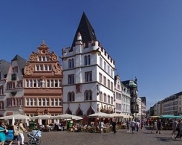
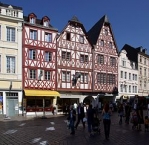
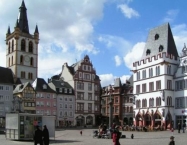
- ⊙Hauptmarkt. mit Steipe (Fest- und Empfangsgebäude der Bürgerschaft), Rotem Haus, St. Gangolf, Marktkreuz, Petrusbrunnen und der naheliegenden Judengasse.
- ⊙Domfreihof. mit Dom, Liebfrauen Basilika, Palais Walderdorff, Dompropstei.
- ⊙Kornmarkt. mit ehem. Oberpostdirektion, kasino und Georgsbrunnen.
- ⊙Viehmarktplatz. mit Thermenmuseum, St. Antonius Kirche und Europahalle.
- ⊙Judengasse
Parks
- ⊙Palastgarten. Zwischen kurfürstlichem Palais und Kaierthermen gelegen. Der an das kurfürstliche Palais angrenzende Teil ist mit Statuen, Blumenrabatten und Hecken aufwändig angelegt. Die große Rasenfläche, die sich im an den Kaiserthemen gelegene Teil befindet, lädt im Sommer zum Grillen und Spiel ein.
Informationen zu Urheber-Rechten | |
|---|---|
Rechte-Ausprägung / Lizenz | by-sa: CREATIVE COMMONS Namensnennung, Weitergabe unter gleichen Bedingungen |
Link zur Rechtebeschreibung | |
Text(e) übernommen von: |
Wikivoyage-Bearbeiter, 'Trier', Wikivoyage, Freie Reiseinformationen rund um die Welt, 12. September 2016, 09:12 UTC, https://de.wikivoyage.org/w/index.php?title=Trier&oldid=960258 |
übernommen / bearbeitet am | 22.02.2012 - 07.06.2021
|
übernommen / bearbeitet durch |
|
